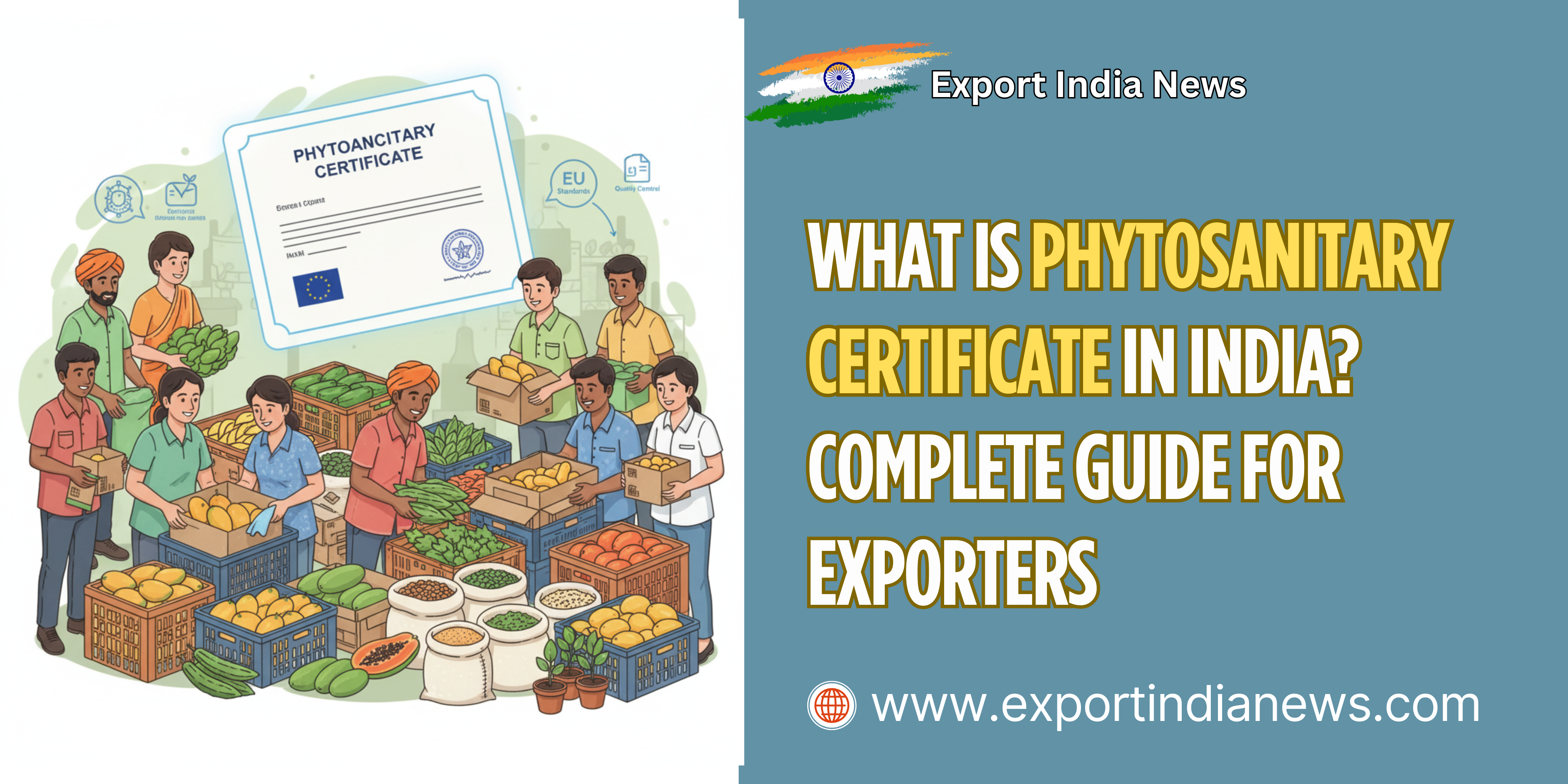
Exporting agricultural products from India requires more than just good-quality produce. International buyers need proof that your fruits, vegetables, seeds, or plants are free from pests and diseases.
A Phytosanitary Certificate is an official document that ensures your exports meet these global standards.
What is a Phytosanitary Certificate?
A Phytosanitary Certificate is an official certificate issued by the government to confirm that agricultural products are free from harmful pests and diseases. It is a key requirement for exporting plants, fruits, vegetables, seeds, and other plant-based products. The certificate ensures compliance with international standards for food safety, protecting importing countries’ crops from contamination. Without this certificate, shipments can be rejected, delayed, or returned at the border.
This certificate is recognized worldwide and is part of international trade regulations established by the International Plant Protection Convention (IPPC). For Indian exporters, it is mandatory for most agricultural exports.
Importance of Phytosanitary Certificate for Exporters
The Phytosanitary Certificate is crucial for several reasons:
- Legal Compliance: Many countries require this certificate before accepting imported agricultural products. Without it, exports may be stopped at customs.
- Food Safety Assurance: Confirms that your produce meets global safety standards.
- Market Trust: Buyers trust certified shipments, helping Indian exporters build credibility.
- Avoid Rejection: Prevents delays or rejection of shipments due to pest infestation.
- Competitive Advantage: Certified exporters often get better contracts and access to premium markets.
This certificate is not just paperwork; it’s a passport to international markets.
Which Products Need a Compulsory Phytosanitary Certificate in India?
The following categories generally require a Phytosanitary Certificate when exported:
- Fruits and Vegetables: Mangoes, grapes, bananas, onions, tomatoes, etc.
- Seeds and Plants: Nursery plants, saplings, and seeds.
- Grains and Cereals: Wheat, rice, pulses.
- Flowers and Ornamentals: Cut flowers and potted plants.
- Processed plant products may require certification depending on the importing country.
It is important to check the specific requirements of the destination country as some products may have additional rules.
Issuing Authority of Phytosanitary Certificate in India
In India, the Directorate of Plant Protection, Quarantine & Storage (DPPQS) is responsible for issuing Phytosanitary Certificates. Local Plant Quarantine Stations located at major airports, seaports, and land border points conduct inspections. These authorities verify that your agricultural products meet international standards for pest-free export.
For exporters, it is essential to know which station serves your region and coordinate with them in advance.
Documents Required for Phytosanitary Certificate Application
To apply for a Phytosanitary Certificate, you need to prepare the following documents:
- Completed application form (available at the quarantine office or online portal).
- Invoice and packing list of the shipment.
- Import permit from the destination country (if applicable).
- Treatment certificate (for fumigation or disinfection done).
- Exporter registration details with relevant authorities.
Having all documents ready in advance ensures smooth processing and prevents delays.
Step-by-Step Process to Get a Phytosanitary Certificate in India
Step 1 – Check Importing Country’s Requirements
Before applying, verify the specific phytosanitary rules of the country you are exporting to. Some countries may require additional treatment or documents.
Step 2 – Prepare Export Goods for Inspection
Ensure that your produce is clean, properly packed, and free from pests or diseases. Maintain records of farm practices, pesticide use, and harvest dates.
Step 3 – Submit Application Online/Offline
Submit the application form along with all required documents to the Plant Quarantine Station. Some stations offer online submission, which can speed up processing.
Step 4 – Inspection by Plant Quarantine Officer
A quarantine officer will inspect the shipment, check documentation, and may take samples for testing. Compliance with integrated farm assurance and food safety standards is verified during this inspection.
Step 5 – Treatment (if required: fumigation, disinfection, etc.)
If pests or contamination are found, appropriate treatment such as fumigation or heat treatment is applied. A treatment certificate may be issued, which is required for the final certificate.
Step 6 – Issuance of Phytosanitary Certificate
Once your shipment passes inspection and any required treatment is done, the quarantine station issues the Phytosanitary Certificate. This certificate accompanies your export shipment.
How Much Does Phytosanitary Certificate Cost in India
The cost varies depending on the size of the shipment, type of product, and treatment required:
- Application fee charged by the Plant Quarantine Station.
- Cost of inspection and any required treatments.
- Charges differ for small shipments versus bulk exports.
On average, small exporters may pay a few thousand rupees, while large shipments can cost more depending on treatment needs.
Validity of a Phytosanitary Certificate
A Phytosanitary Certificate is generally valid for a single shipment. It cannot be reused for multiple exports. Some importing countries have stricter validity periods, so exporters must plan shipment dates carefully to avoid certificate expiration.
How Long Does It Take to Get a Phytosanitary Certificate?
Processing usually takes 3–7 working days once the application and inspection are complete. Delays can occur due to:
- Large shipment size.
- Required treatments like fumigation.
- Holidays or local quarantine office workload.
Applying in advance ensures that exports are not delayed.
Common Challenges Exporters Face in India
- Lack of awareness of the documentation and process.
- Delays at the Plant Quarantine Stations.
- Additional treatments that increase cost and time.
- Limited number of inspection stations in remote areas.
Understanding these challenges helps exporters plan better and avoid last-minute issues.
Tips for Exporters to Get a Smooth Certification
- Apply well in advance of your shipment date.
- Keep complete records of farm practices and pesticide use.
- Work with experienced clearing agents if needed.
- Ensure produce is clean, properly packed, and ready for inspection.
- Stay updated on importing country requirements.
Countries Where Phytosanitary Certificate is Mandatory
A Phytosanitary Certificate is required by almost all importing countries for plant-based exports. Key examples include:
- European Union countries
- USA and Canada
- Middle East markets like UAE and Saudi Arabia
- Asian countries including Japan, South Korea, and Singapore
Essentially, for most international exports of plants, fruits, or vegetables, this certificate is mandatory.
Alternatives and Related Certificates for Exporters
While Phytosanitary Certificate is key, other related documents may also be needed:
- Fumigation Certificate – for treated shipments.
- Heat Treatment Certificate – if required for pest control.
- Organic Certification – for organic produce.
- GlobalGAP or HACCP Certification – for additional food safety and quality assurance.
Knowing which certificates are needed helps exporters avoid compliance issues.
Key Takeaways
- Phytosanitary Certificate ensures your exports are pest-free and meet international standards.
- Mandatory for most plant-based exports from India.
- Early preparation and complete documentation are essential for smooth processing.
- Helps Indian exporters gain trust, avoid rejection, and access premium international markets.
FAQs
Q1. Who issues the Phytosanitary Certificate in India?
Directorate of Plant Protection, Quarantine & Storage through Plant Quarantine Stations.
Q2. Is it required for all exports?
Not for all, but mandatory for most plant-based agricultural exports.
Q3. How can small farmers get it?
Through local Plant Quarantine Stations or group certification schemes.
Q4. Can the certificate be renewed?
No, it is valid only for a single shipment.
Q5. Is fumigation always required?
Only if pests are found during inspection or required by importing country.
Q6. Can exporters apply online?
Some Plant Quarantine Stations provide online application facilities.
Q7. Is it needed for processed plant products?
Depends on the importing country’s rules.
Q8. What happens if shipment goes without it?
Shipment may be rejected, delayed, or returned.