Introduction
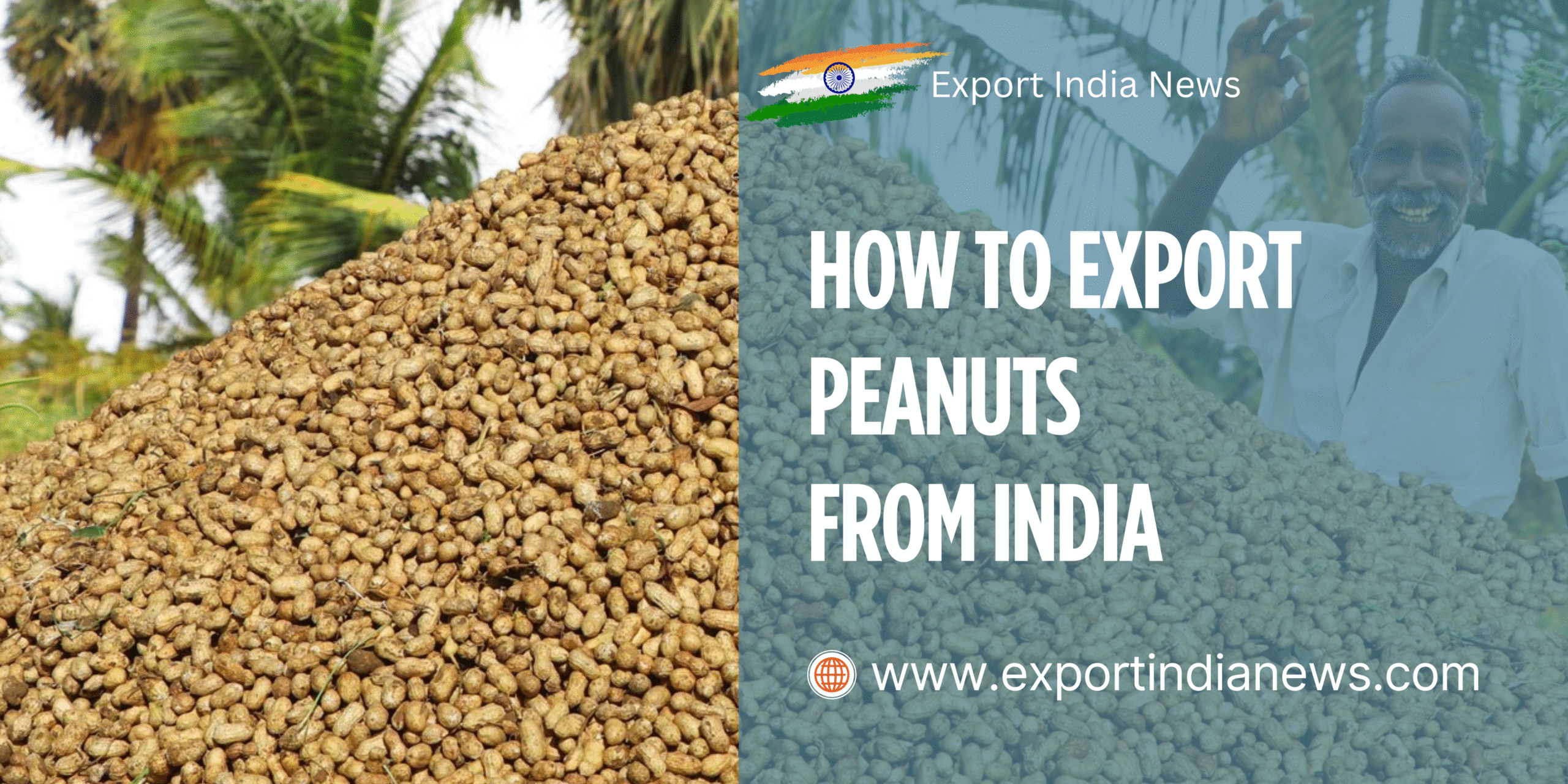
India is one of the largest producers of peanuts in the world. Known for their high quality, Indian peanuts are exported to many countries such as Indonesia, Vietnam, China, Malaysia, European Union nations, and the Middle East. Exporting peanuts from India is a profitable trade because of global demand in food processing, oil extraction, snacks, and confectionery industries.
For a new exporter, understanding the rules, government regulations, and procedures is very important. The process requires proper documentation, licenses, and compliance with safety standards. With the right steps, Indian exporters can build long-term opportunities in international markets.
Government Regulations and Authorities
Peanut exports from India are regulated under different government departments.
- DGFT (Directorate General of Foreign Trade): Issues the Importer Exporter Code (IEC), mandatory for all exporters.
- APEDA (Agricultural and Processed Food Products Export Development Authority): Responsible for promoting and regulating peanut exports. Exporters must register with APEDA to receive an RCMC (Registration-Cum-Membership Certificate).
- FSSAI (Food Safety and Standards Authority of India): Ensures food safety compliance in production and packaging.
- Plant Quarantine Department: Provides the Phytosanitary Certificate, which is mandatory for peanuts as they are agricultural goods.
- Export Inspection Council (EIC): Certifies quality under mandatory pre-shipment inspection.
Peanuts are also listed as a notified commodity under APEDA. Exporters must follow quality standards set by importing countries.
Step-by-Step Peanut Export Process
1. Company Registration
The exporter must register a business entity, such as a proprietorship, partnership, or private limited company. A current account in a bank is also needed.
2. Importer Exporter Code (IEC)
Apply online through DGFT for the IEC code. This is the basic license for export activities.
3. APEDA Registration
Every peanut exporter must register with APEDA to get RCMC. This helps in accessing government schemes, export data, and buyer connections.
4. FSSAI License
As peanuts are food products, the exporter must hold an FSSAI license. Processing units should also comply with hygiene and food safety standards.
5. Market Research
Study demand in countries like Indonesia, Vietnam, and Europe. Understand their quality specifications, packaging norms, and food safety rules.
6. Buyer Agreement
Contact buyers through trade fairs, B2B portals, or export agents. Confirm product specifications, price, and shipment terms before signing contracts.
7. Processing and Grading
Peanuts must be properly cleaned, graded, and sorted. The exporter should ensure aflatoxin-free products, as many countries have strict limits.
8. Packaging
International buyers prefer vacuum-sealed or nitrogen-flushed packaging. Strong export cartons are used to avoid damage during shipment. Labels must show product details, weight, origin, and batch number.
9. Quality Certification
Peanuts must pass mandatory pre-shipment inspection by EIC. Certificates are issued only after strict testing, especially for aflatoxins.
10. Documentation and Customs Clearance
The exporter must file the shipping bill with Customs via the ICEGATE portal. Required documents are:
- Commercial Invoice
- Packing List
- Bill of Lading / Airway Bill
- Phytosanitary Certificate
- Fumigation Certificate
- Certificate of Origin
- Quality Certificate from EIC
11. Shipping
For bulk exports, sea freight is most common. For urgent and smaller orders, air freight can be used.
Key Documents Needed for Peanut Export
- Importer Exporter Code (IEC) – from DGFT
- APEDA RCMC – from APEDA
- FSSAI License – from Food Safety Authority
- EIC Certificate – Export Inspection Council
- Phytosanitary Certificate – from Plant Quarantine Department
- Commercial Invoice
- Packing List
- Bill of Lading / Airway Bill
- Certificate of Origin
- Fumigation Certificate
Government Support for Peanut Exporters
The Indian government provides multiple benefits to encourage agricultural exports.
- APEDA Schemes: Assistance in packaging development, quality testing, and participation in international trade fairs.
- Export Incentives: Duty drawback schemes and tax benefits under GST refund.
- Quality Labs: NABL-approved laboratories supported by APEDA for aflatoxin testing.
- Market Access Support: APEDA regularly negotiates with importing countries to reduce restrictions on Indian peanuts.
Benefits of Exporting Peanuts from India
- High Demand: Peanuts are used in food, snacks, oil, and confectionery.
- Value Addition: Graded and aflatoxin-free peanuts earn higher export prices.
- Government Backing: Strong support through APEDA and EIC.
- Global Reach: India is already a trusted supplier in Asia, Europe, and the Middle East.
- Employment Generation: Peanut export supports farmers, processors, and logistics workers.
Challenges in Peanut Export
Exporters may also face challenges. Some of them are:
- Strict aflatoxin limits in Europe.
- High competition from countries like Argentina and USA.
- Price fluctuations in domestic markets.
- Need for advanced storage and processing to meet international standards.
These challenges can be managed with proper testing, better storage, and competitive pricing.
Conclusion
Exporting peanuts from India is a profitable business if done with planning and compliance. By registering with APEDA, obtaining the IEC, and ensuring aflatoxin-free quality, exporters can meet global demand with confidence.
Government support through APEDA and EIC makes the process smoother. Proper documentation, buyer agreements, and international packaging standards are the key to success. With India’s strong peanut production base, exporters can grow steadily and build lasting trade relationships worldwide.
