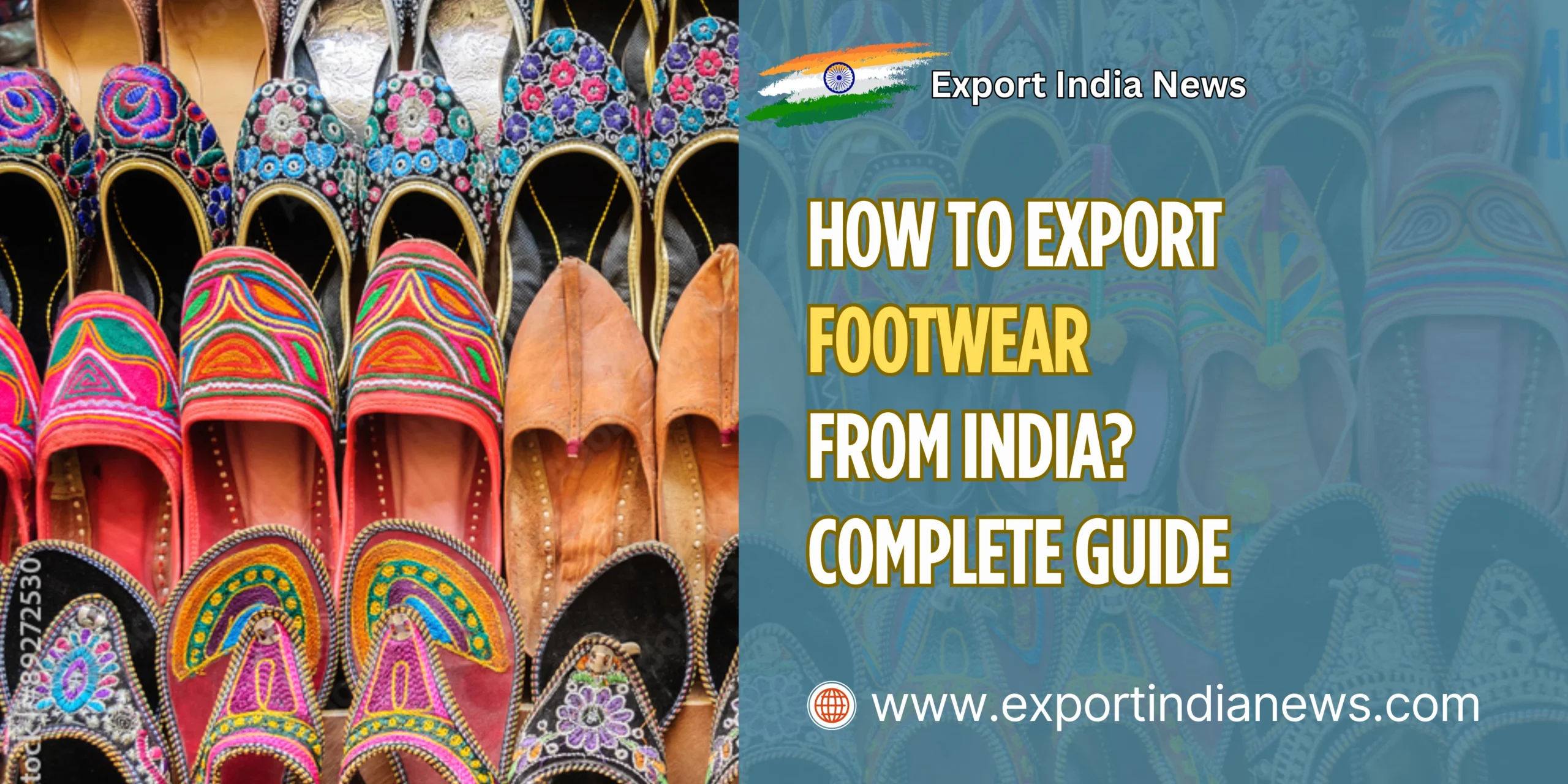
India’s footwear industry is one of the largest globally, producing millions of pairs annually, including leather, synthetic, casual, and ethnic footwear.
Many exporters know the basics but understanding compliance, identifying buyers, calculating costs, and shipping efficiently.
This guide shares insights of the footwear export industry in India, designed to help readers turn knowledge into actionable steps.
Why is Indian Footwear in Demand Globally?
Indian footwear is valued worldwide for its craftsmanship, affordability, and variety. Countries like the United States, UAE, Europe, and Africa import Indian shoes in large volumes.
Key reasons for demand:
- Leather exports: High-quality leather shoes are in demand in Europe and the US.
- Volume capacity: India produces millions of pairs each year, allowing bulk shipments.
- Versatility: Casual, sports, and ethnic footwear are exported successfully.
- Cost competitiveness: Lower production costs while maintaining quality.
The global market looks for durable shoes that meet international standards. Indian exporters who can combine quality with reliable delivery have a strong competitive edge.
What Type of Footwear India Exports?
India exports multiple categories of footwear:
- Leather footwear: Formal, casual, and designer shoes. Most exported to Europe and the US.
- Synthetic footwear: Cost-effective options, exported to Africa and Middle East.
- Sports and sneakers: Growing segment, demand increasing in urban markets globally.
- Ethnic footwear: Mojaris, juttis, and handcrafted designs for niche markets.
Each type has specific quality, packaging, and compliance requirements. Understanding which type matches the target market is crucial for profitability.
Best International Markets to Export?
Choosing the right market is as important as producing quality footwear:
- United States: Prefers leather and sports footwear. Payment through LC or advance. High-quality expectations.
- Europe: Designer leather footwear, strict quality and sustainability compliance.
- Middle East (UAE, Saudi Arabia): Bulk orders for casual and formal footwear.
- Africa: Price-sensitive buyers, bulk raw or synthetic footwear.
Market selection should consider payment terms, volume requirements, and compliance expectations.
What Licenses, Certifications & Regulations Should You Know?
Compliance is critical to avoid shipment rejections:
- IEC Registration: Mandatory for all exporters.
- DGFT guidelines: Specific rules for leather and synthetic footwear exports.
- FIEO membership: Access to trade fairs, buyer connections, and export support.
- Leather Export Certificate / Synthetic Compliance: Required by many importers.
- Country-specific standards: EU REACH, US CPSIA, Middle East customs.
- Labeling & packaging rules: Must be clear, including material, size, and origin.
Following these rules reduces risk and ensures smoother international operations.
How to Ensure Footwear Meets Buyer Expectations?
Quality and packaging are major reasons for repeat orders:
- Material inspection: Leather must be uniform, durable, and properly tanned. Synthetic shoes must be free from defects.
- Durability & stitching: Inspect sole attachment, stitching, and finishes. Buyers reject poorly made shoes even if they look good.
- Packaging standards: Shoe boxes, polybags, and cartons must prevent deformation during transit.
- Branding & labeling: OEM orders require accurate brand, size, and country of origin labeling.
Practical tip: Conduct pre-shipment inspections and include buyer-specified quality checklists.
Which International Markets Offer the Best Opportunities?
- Europe: High-margin, quality-driven buyers. Focus on leather and branded shoes.
- USA: Casual and sports footwear are in demand. Payment reliability is high.
- Middle East: Bulk casual and formal footwear orders. Price sensitive but reliable volume.
- Africa & Southeast Asia: Entry-level markets; bulk exports, lower margin.
Experienced exporters first target markets with clear regulations and secure payment, then expand to emerging regions.
How to Identify Reliable Buyers & Build Long-Term Partnerships?
- Use verified B2B platforms, trade fairs, and exhibitions.
- Check references, business licenses, and prior trade history.
- Structure contracts with payment terms, quality clauses, and dispute resolution.
- Avoid buyers requesting large shipments without LC or advance payment.
Long-term partnerships come from reliability, consistent quality, and timely delivery.
How to Price Your Footwear & Calculate Real Export Profit?
Pricing should consider all costs and market expectations:
- Raw materials: Leather, synthetic, or other inputs.
- Production costs: Labor, stitching, finishing.
- Packaging & labeling: Boxes, polybags, shipping marks.
- Shipping & insurance: Freight costs, port fees, insurance for loss/damage.
- Customs duties: Vary by country and product type.
Example: Exporting 10,000 pairs of leather shoes to the US. Include all above costs before adding profit margin. FOB or CIF pricing must be carefully calculated to remain competitive.
How to Manage Logistics & Shipping Efficiently?
Efficient logistics saves money and protects reputation:
- Shipping method: Sea freight for bulk, air for urgent or high-value orders.
- Container packing: Proper stacking, separation, and padding.
- Customs documentation: Commercial invoice, packing list, certificate of origin.
- Freight forwarders: Experienced agents reduce delays and cost.
Common mistakes: Improper packing, missing documents, or wrong labeling.
How to Mitigate Payment & Trade Risks in Footwear Exports?
Financial risks can hurt even experienced exporters:
- Payment methods: LC, advance payment, DP/DA.
- Credit checks: Verify buyers before shipping.
- Insurance: Cargo loss, damage, theft.
Contracts: Include quality, quantity, and dispute resolution clauses.
Are Bulk Orders, Tenders & Institutional Clients Worth Pursuing?
Government and institutional orders offer volume and stability:
- Schools, military, and corporate tenders for shoes.
- Required documents: Quality certificates, commercial invoice, compliance proof.
- Start with smaller tenders to gain experience before scaling.
Benefits: repeat orders, long-term revenue, and bulk pricing advantage.
Key Takeaways
- India produces millions of pairs of footwear, both leather and synthetic.
- Compliance and certifications are non-negotiable for smooth export.
- Quality, stitching, sole durability, and packaging determine buyer satisfaction.
- Market selection, verified buyers, pricing, logistics, and risk management are crucial.
- Bulk orders and tenders can secure steady revenue.
FAQs
Can leather and synthetic shoes be shipped together?
Yes, but ensure separate packing and labeling to prevent chemical reactions, damage, or buyer confusion. Follow customs and material compliance rules strictly.
How to comply with EU REACH standards for leather footwear?
Test leather for restricted chemicals, maintain proper documentation, and work with certified labs. Ensure all materials meet EU safety regulations.
Typical lead time for exports to the US and Europe?
Sea freight: 30–45 days, air freight: 7–15 days. Include production, packaging, and customs clearance in your planning.
How to handle OEM branding for multiple buyers?
Keep separate molds, labels, and packaging. Verify each buyer’s brand specs, and maintain clear documentation for shipment accuracy.
Which countries allow small exporters to start with low-volume shipments?
Middle East, Africa, Southeast Asia allow smaller orders, often with relaxed compliance. Start small, build relationships, then scale up.
How to manage returns and defective shipments?
Use pre-shipment inspections, quality checks, and proper packaging. Include return policies in contracts and insurance coverage for losses.
Should exporters focus on casual, sports, or ethnic footwear first?
Start with products you produce best and have demand for. Casual or sports shoes suit bulk markets; ethnic footwear targets niche buyers.
What packaging innovations prevent shipping damage?
Use strong shoe boxes, padded cartons, polybags, and separators. Label fragile items, avoid overstacking, and control moisture exposure.
How to secure long-term contracts with overseas buyers?
Deliver consistent quality, on-time shipments, and transparent communication. Offer flexible payment and adapt to buyer-specific requirements.
Is CIF or FOB better for new exporters in the footwear industry?
FOB is safer for beginners, as the buyer handles freight risk. CIF can be used if confident with logistics and shipping costs.