Introduction
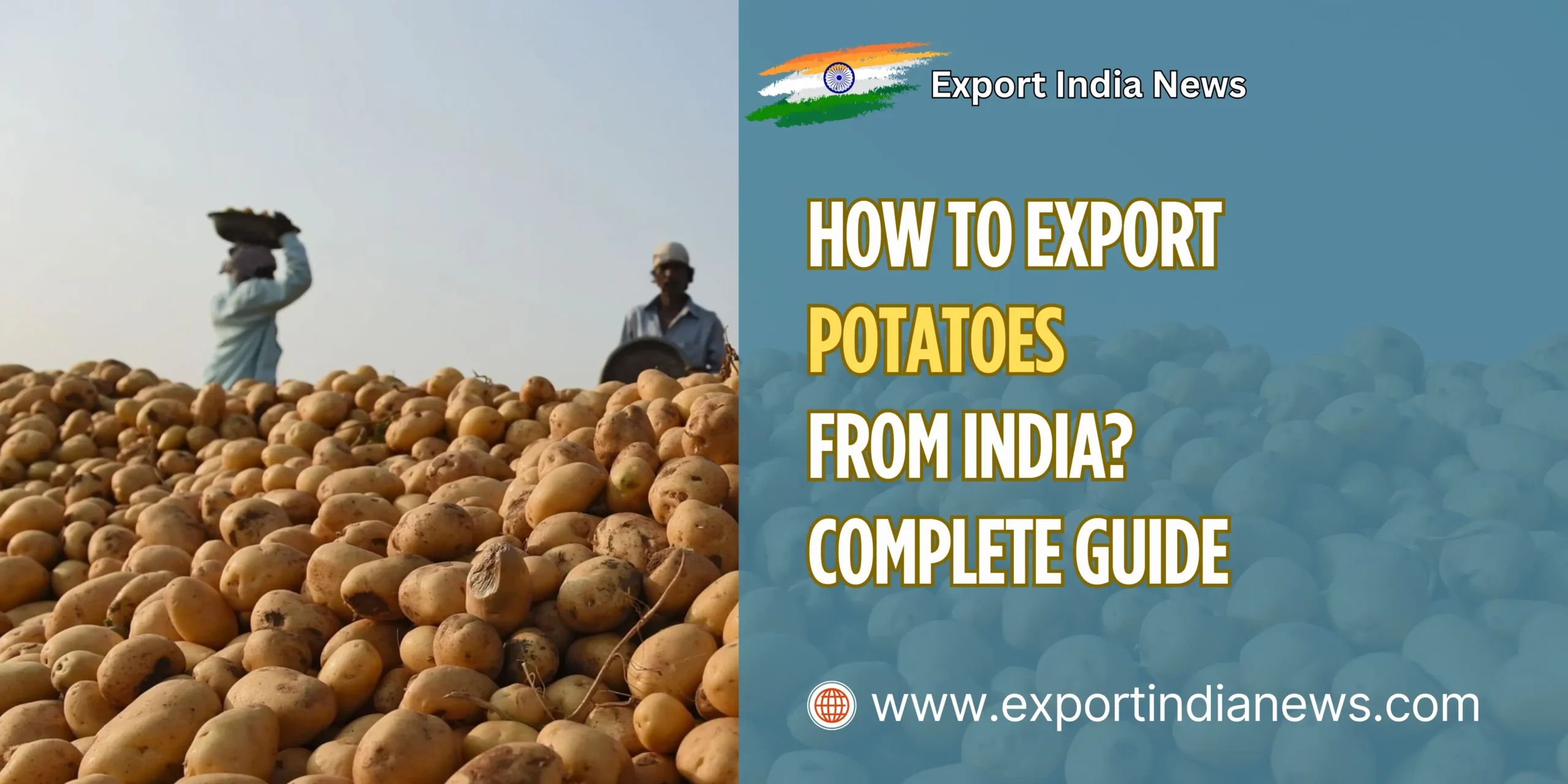
Exporting potatoes from India can be a profitable business if done correctly. India is one of the largest producers of potatoes, making it an ideal exporter to global markets.
For new exporters, it may seem complicated. This guide explains everything step by step so that new exports like you can enter into potatoes exporting confidently.
Join our WhatsApp Channel to Stay Updated
Why Export Potatoes from India?
India produces a large quantity of high-quality food products, including potatoes. Many countries rely on imports for their potato supply. By exporting, Indian farmers and exporters can earn better margins than selling locally.
The global demand for potatoes is steady due to their use in processed foods, snacks, and staple meals. Exporting also helps diversify markets and reduce dependence on domestic sales.
Who Can Export Potatoes from India? (Exporter Eligibility)
Not everyone can export potatoes. To be eligible:
- You must be an Indian resident or a registered Indian company.
- You need a basic understanding of food products export regulations.
- You should have access to quality potatoes that meet international standards.
- Knowledge of logistics, customs, and foreign trade helps.
In short, anyone with a legal entity, resources, and willingness to follow procedures can export.
Licenses & Registrations Required
Before you export, you need proper licenses:
- Import Export Code (IEC) from DGFT. It is mandatory for all exporters.
- FSSAI Registration for exporting edible products like potatoes.
- GST Registration if trading commercially.
- Sometimes, a Plant Quarantine Certificate may be needed depending on the country.
These registrations ensure you follow Indian and global laws.
Potato Export Documentation Checklist
The main documents required include:
-
- Commercial Invoice
- Packing List
- Bill of Lading / Airway Bill
- Certificate of Origin
- Phytosanitary Certificate
- FSSAI Certificate
- Export Declaration Form
- Insurance Certificate
- Commercial Invoice
Having these ready avoids delays in customs and ensures smooth shipments.
Step-by-Step Process of Exporting Potatoes from India
Step 1: Market Research & Identifying Buyers
Research is the first step. Identify countries with high demand for potato exports. Check import regulations, tariffs, and buyer preferences. Online B2B platforms, trade fairs, and export promotion councils are good starting points.
Step 2: Understanding Pricing Terms (FOB / CIF / EXW)
Pricing determines profits. Learn key terms:
- FOB (Free on Board): Buyer pays shipping from Indian port.
- CIF (Cost, Insurance, Freight): Seller covers shipping and insurance.
- EXW (Ex Works): Buyer collects goods from your warehouse.
Choose terms based on your capacity and logistics knowledge.
Step 3: Obtaining Required Certificates & Licenses
Get all necessary certificates before shipping. This includes FSSAI, phytosanitary, and quality certificates. Buyers often request them to ensure safety and quality.
Step 4: Quality Checks & Grading of Potatoes
Quality matters for international buyers. Grading ensures potatoes are free from:
- Diseases
- Sprouts or blemishes
- Improper sizes
Use moisture tests, visual inspection, and sorting machines to meet standards.
Step 5: Packaging & Labeling Standards
Packaging protects potatoes during shipping. Use:
- Strong cartons or jute bags
- Proper ventilation
- Labeling with country of origin, net weight, and export license number
Good packaging increases shelf life and reduces damage.
Step 6: Logistics: Freight Forwarding & Cold Chain Shipping
Potatoes need controlled temperatures to stay fresh. Use cold chain logistics:
- Refrigerated trucks or containers
- Temperature monitoring during transit
- Reliable freight forwarders familiar with food products
Proper logistics prevent spoilage and maintain quality.
Step 7: Customs Clearance & Compliance
Before shipment, customs requires:
- Invoice verification
- Export documents check
- Payment of applicable duties
Hire an experienced customs broker if needed. Compliance avoids fines or cargo delays.
Step 8: Payment Security — LC, Advance, TT, Escrow
Protect your payments. Common methods:
- LC (Letter of Credit): Bank guarantees payment.
- Advance Payment: Buyer pays upfront.
- TT (Telegraphic Transfer): Fast bank transfer.
- Escrow Services: Third-party payment release after delivery
Choosing the right method reduces risk.
Finding Buyers for Indian Potatoes
Finding buyers involves networking and marketing. Options include:
- Online B2B portals like Alibaba, IndiaMART
- Export promotion councils
- Trade fairs and exhibitions
- Direct contacts with overseas distributors and wholesalers
Understanding buyer needs and preferences is crucial.
Understanding Global Potato Markets
Different countries have different potato requirements:
- Europe prefers large, blemish-free potatoes.
- Middle East imports mostly for processed foods.
- Southeast Asia may accept smaller or irregular shapes.
Study market trends, tariffs, and competitor pricing for better strategy.
Compliance & Quality Standards
Countries have strict standards for food imports:
- Maximum pesticide limits
- No sprouting or damaged potatoes
- Proper labeling with FSSAI or phytosanitary certificates
Following standards builds trust and ensures repeat business.
Government Schemes & Support
The Indian government promotes potato exports:
- Export subsidies under MEIS/SEIS
- Assistance from APEDA (Agricultural and Processed Food Products Export Development Authority)
- Logistic support and training programs
Leveraging these schemes reduces costs and risk.
Common Challenges & How to Avoid Them
- Quality issues: Use strict grading and testing.
- Logistics delays: Hire experienced freight forwarders.
- Payment risk: Use LC or escrow services.
- Regulatory issues: Maintain proper documentation.
- Market competition: Identify niche buyers or countries needing Indian potatoes.
Planning ahead minimizes these challenges.
Best Potato Producing & Sourcing Regions in India
Major regions include:
- Uttar Pradesh: High production, popular for table potatoes
- West Bengal: Large-scale cultivation
- Punjab & Haryana: Quality exports for Europe
- Maharashtra & Karnataka: Good for processed potato products
Choosing the right sourcing region ensures better quality and supply reliability.
Profit Margins, Costing & Pricing Breakdown
Profit margins depend on:
- Cost of potatoes (procurement)
- Packaging & logistics
- Customs duties
- Market pricing abroad
Example: If buying potatoes at ₹15/kg and selling at ₹35/kg (FOB), your margin is significant after deducting logistics and certificates. Always calculate total cost, including hidden expenses.
Key Takeaways
- Exporting potatoes from India is profitable with proper planning.
- Legal registrations, quality checks, and documentation are mandatory.
- Understanding markets and buyers ensures smooth business.
- Proper logistics and packaging prevent losses.
- Government schemes help reduce costs and support new exporters.
Follow these steps, and even beginners can start exporting confidently.
FAQs
Q1. Can anyone export potatoes from India?
Yes, with IEC registration, FSSAI license, and proper understanding of regulations.
Q2. Do I need a special quality certificate for export?
Yes, Phytosanitary Certificate and FSSAI certificate are required.
Q3. What is the best season to export potatoes?
Season depends on the region, but generally after harvest, from October to March.
Q4. Which countries import Indian potatoes the most?
Middle East, Southeast Asia, and some European countries are major buyers.
Q5. How should potatoes be packaged for export?
Use ventilated cartons or jute bags with labeling and temperature control.
Q6. What payment methods are safest for export?
Letter of Credit (LC) and Escrow services are safest for first-time exporters.
Q7. Can I export small quantities initially?
Yes, but buyers may prefer bulk orders for cost efficiency.
Q8. How do I find buyers overseas?
Use B2B portals, trade fairs, export councils, or direct contacts.
Q9. Are there government subsidies for potato export?
Yes, under APEDA and schemes like MEIS/SEIS.
Q10. Do I need cold storage for potatoes before shipping?
Yes, to maintain freshness, especially for long-distance exports.
