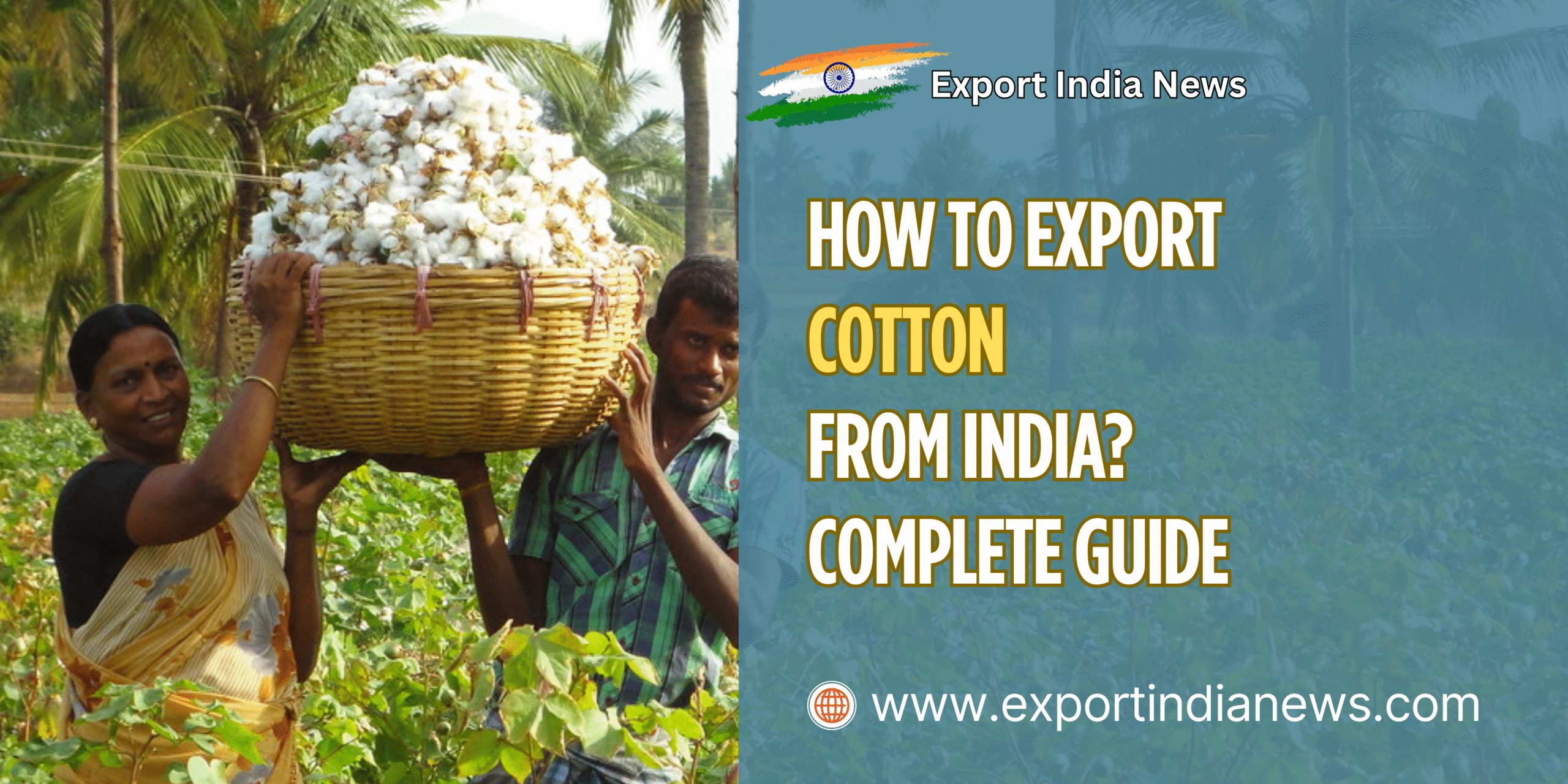
Exporting cotton from India can seem complicated if you are starting for the first time. Indian cotton is a major raw material in the global cotton textiles industry, and demand is growing across countries. For a new exporter, it is important to understand licenses, documentation, pricing, and buyers before stepping into the export market. This guide explains everything step by step.
Why Export Cotton from India?
India is one of the largest producers of cotton in the world. The country’s cotton products are valued for their quality and durability. Exporting cotton provides higher income than selling in domestic markets.
Benefits include:
- Better pricing compared to local markets.
- Access to global export markets in countries like China, Bangladesh, and Turkey.
- Opportunity to grow in the export sector and connect with international buyers.
- Contribution to the Indian textile and cotton economy.
With increasing demand, starting exports now can be profitable. Many traders and cooperatives have built sustainable businesses in the export business by focusing on quality and compliance.
Understand Exporter Eligibility
Before exporting cotton, you must meet certain criteria:
- You can be a trader, farmer, or SME involved in cotton production.
- Your business should be legally registered – Proprietorship, Pvt Ltd, or Cooperative.
- You need to have a PAN card and bank account.
- No prior experience is necessary, but understanding export documentation and market trends is essential.
Anyone meeting these basic requirements can start exporting Indian cotton. The first step is understanding the regulatory framework.
Key Licenses and Registrations Required
Exporting cotton requires specific registrations:
- Import Export Code (IEC): Mandatory for all exporters. Issued by DGFT.
- GST Registration: Needed for tax compliance and invoicing.
- Registration with Export Promotion Councils: These councils, like APEDA, support cotton and agricultural exports.
- Quality Certifications: Some buyers may ask for certifications like Cotton Mark or organic certificates.
- Other Optional Registrations: Registration with FIEO or export credit organizations for credibility.
These licenses ensure legal compliance and smooth export operations.
Cotton Export Documentation Checklist
Correct documentation is crucial to avoid delays. Essential documents include:
- Commercial Invoice and Packing List: Details of the cotton and shipment.
- Bill of Lading / Airway Bill: Shipping evidence.
- Certificate of Origin: Shows the cotton is from India.
- Phytosanitary / Quality Certificates: Confirms cotton meets standards.
- Export License / IEC details: Proof of registration.
- Insurance Documents: Protects against loss during shipping.
Accurate documents are key to building trust with buyers and customs authorities.
Step-by-Step Process of Exporting Cotton from India
1. Market Research and Identifying Buyers
First, understand which countries import cotton. Check major cotton importers and their demand trends. Use B2B platforms, trade fairs, and export promotion councils to find buyers.
2. Understand Pricing (FOB, CIF, EXW)
Pricing can be confusing. Common terms:
- FOB (Free On Board): Buyer pays shipping from port.
- CIF (Cost, Insurance, Freight): Seller includes freight and insurance.
- EXW (Ex Works): Buyer collects cotton from your location.
Choose the right pricing model based on your capacity and buyer agreement.
3. Obtain Licenses and Certificates
Before shipment, ensure your IEC, GST, and quality certificates are ready. Some international buyers may require additional certifications.
4. Quality Checks and Grading of Cotton
Export buyers expect high-quality cotton. Indian cotton is graded by fiber length, strength, and cleanliness. Poor quality leads to rejection and loss. Always check moisture content, color, and purity.
5. Packaging and Labeling Requirements
Cotton should be packaged securely to prevent damage. Use strong bales with proper labels showing weight, grade, and origin. Labeling must meet the buyer country’s standards.
6. Logistics: Freight Forwarding, Shipping, and Insurance
Choose a reliable freight forwarder. Decide between sea or air freight based on urgency and cost. Insurance is critical to protect your shipment from damage or loss.
7. Customs Clearance and Compliance
Customs clearance requires submission of all documents to port authorities. Proper documentation ensures smooth export clearance and avoids fines or shipment delays.
8. Payment Methods: LCs, TT, Escrow, etc.
Secure payment methods are crucial. Common options:
- Letter of Credit (LC): Bank guarantees payment after shipment.
- Telegraphic Transfer (TT): Direct bank transfer.
- Escrow Accounts: Trusted third party holds payment until delivery confirmation.
Finding Buyers for Indian Cotton
Finding reliable buyers is vital for the export business. Use these channels:
- B2B platforms: IndiaMART, Alibaba, TradeIndia.
- Direct contacts with textile mills and manufacturers.
- Trade fairs and export promotion councils networks.
Consistency and quality delivery build long-term relationships.
Understand International Cotton Markets
Study which countries import cotton, their volume, and pricing trends. Key importers of Indian cotton include China, Bangladesh, Turkey, and Vietnam. Each market has unique quality expectations and pricing standards. Understanding them ensures higher profits and fewer shipment rejections.
Compliance and Quality Standards
International buyers require cotton to meet standards:
- GOTS or OEKO-TEX certifications for organic cotton.
- Accurate labeling and packaging per importing country norms.
- Compliance with customs and income tax regulations in India.
Government Schemes and Support for Cotton Exporters
The Indian government supports exporters through:
- Export incentives via MEIS / RoDTEP or current schemes.
- Guidance from export promotion councils.
- Financial support for freight, insurance, and market promotion.
These schemes reduce cost and make your cotton more competitive internationally.
Common Challenges in Cotton Export and How to Overcome Them
- Regulatory Delays: Maintain all licenses and certificates.
- Finding Buyers: Use multiple channels and verify credibility.
- Quality Issues: Always perform grading and quality checks.
- Payment Risks: Use secure payment methods like LC.
- Logistics Problems: Choose experienced freight forwarders.
Planning in advance helps avoid these challenges.
Pricing, Profit Margins, and Cost Considerations
Profit depends on cotton grade, market price, and shipping costs. Include costs like:
- Freight and insurance.
- Packaging and labeling.
- Export duty and taxes.
Careful calculation ensures a sustainable export business and prevents losses.
Key Takeaways
- Indian cotton has high demand in global markets.
- Exporting requires proper licenses, quality checks, and documentation.
- Understanding buyers, pricing, and logistics is crucial.
- Government support and schemes make exports easier and more profitable.
- Planning, quality control, and secure payment methods ensure a successful export journey.
FAQs
Q1. Do I need a registered business to export cotton?
Yes, registration is required to obtain IEC and comply with GST.
Q2. What is the minimum quantity of cotton required for export?
There is no strict minimum, but most shipments start from 1–5 tons.
Q3. How long does the export process take?
From registration to shipment, it can take 3–6 weeks, depending on documentation and buyer readiness.
Q4. Which countries are the largest importers of Indian cotton?
Major buyers include China, Bangladesh, Turkey, and Vietnam.
Q5. Do I need quality certifications for all buyers?
Not always, but certifications increase trust and access to premium markets.
Q6. What is FOB pricing?
FOB (Free On Board) means the buyer pays for shipping and insurance from the Indian port.
Q7. How do I find genuine buyers?
Use B2B platforms, trade fairs, and export promotion councils. Verify with references and contracts.
Q8. Is insurance necessary for cotton exports?
Yes, insurance protects your shipment from loss or damage during transit.
Q9. Can farmers directly export cotton?
Yes, farmers can export if they meet licensing and quality standards.
Q10. Are there government export incentives for cotton?
Yes, schemes like RoDTEP and support from export promotion councils provide financial benefits.
